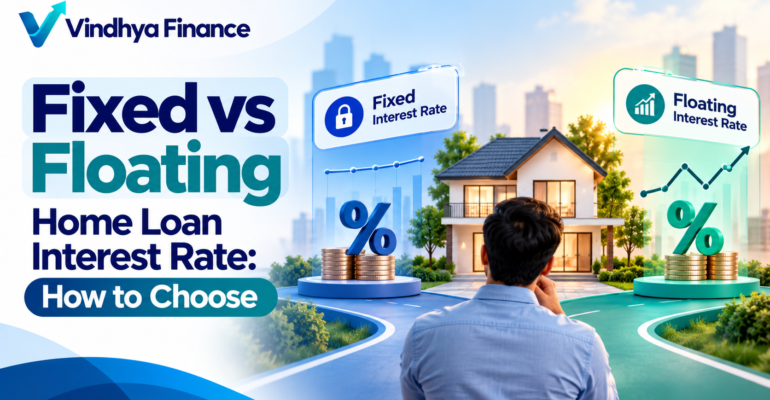
Choosing a fixed vs floating home loan interest rate matters because the rate structure can affect payment predictability and the loan’s cost over time. A fixed rate may offer greater certainty for the period specified in the agreement, while a floating rate can change under the lender’s benchmark and reset terms.
Neither structure is automatically better for every borrower. Your decision should consider the actual offer, the rate-reset mechanism, total cost, repayment flexibility, expected budget and the risks you can reasonably manage. Product names and conditions can differ, so read the lender’s documents rather than relying on labels alone.
Quick Answer: What is the difference between fixed and floating home loan interest rates?
A fixed home loan rate stays unchanged for the period defined in the loan agreement, while a floating rate can move under the lender’s applicable benchmark and reset terms. Compare the stated rate, reset rules, EMI/tenure treatment, conversion conditions, charges and total cost before choosing.
Key Facts About Fixed and Floating Home Loan Rates
- “Fixed” may apply for a defined period rather than necessarily the entire loan tenure.
- Floating rates can change when the relevant benchmark or applicable spread changes under the agreement.
- Rate changes may affect EMI, tenure or both, depending on the lender’s terms.
- A starting rate alone does not show how a loan will behave in future.
- Conversion, switching or administrative charges should be checked in the written terms.
- The most suitable structure depends on individual affordability and risk tolerance.
Fixed vs Floating Home Loan Interest Rate: Key Differences
A fixed rate is designed to remain unchanged for the period specified by the lender’s agreement. The payment may therefore be more predictable during that period, subject to the exact product terms. Some products described as fixed may have a fixed-rate period followed by a different arrangement, so check how long the fixed rate applies.
A floating rate is linked to a benchmark or reference rate and can change according to the loan agreement. When the applicable rate changes, the lender may revise the EMI, the remaining tenure or a combination of both, based on the terms and applicable rules. A lower starting rate should not be treated as a promise that the rate will remain unchanged.
To compare the two options fairly, use the same loan amount and tenure, read the actual rate conditions and understand how changes would affect your budget. Ask the lender to illustrate the repayment impact of a reasonable rate increase as well as the current scenario.
What to Compare Before Choosing a Rate Type
Before choosing a rate structure, review the following:
- Rate period: Confirm whether the fixed rate applies for the full term or only a specified period.
- Benchmark and spread: For a floating rate, understand the reference benchmark, applicable spread and the conditions under which they may change.
- Reset frequency: Check when the rate can be reviewed and when a change can affect repayment.
- EMI and tenure adjustments: Ask what happens if the floating rate rises or falls.
- Switching or conversion: Confirm whether you can change rate type, under which conditions and whether charges apply.
- Total cost: Compare the applicable fees, repayment schedule and estimated interest, not just the first displayed rate.
- Budget resilience: Consider whether you could manage a higher EMI or a longer repayment period if the rate changes.
Ask for the terms in writing and compare the Key Facts Statement and loan agreement supplied by the lender. A verbal explanation or an online illustration should not replace the actual contractual disclosures.
Fixed vs Floating Rate Home Loan: Comparison Table
| Factor | Fixed-rate structure | Floating-rate structure |
| Rate movement | Remains unchanged for the period defined in the agreement | May change under the benchmark and reset terms |
| Payment predictability | Usually more predictable during the fixed period | Less predictable if the rate changes |
| Effect of rate changes | The rate may not move during the fixed period; later treatment depends on terms | Changes may affect EMI, tenure or both |
| Key terms to review | Duration of fixed period, later reset/conversion conditions | Benchmark, spread, reset timing and adjustment method |
| Potential concern | The fixed period or later conversion terms may be misunderstood | A rate increase may make repayments harder to manage |
| Best comparison method | Review full-period cost scenarios where available | Review current cost and rate-change scenarios |
The table describes general structures. Exact features can differ by lender and product. Do not assume that every fixed-rate product offers the same tenure or that every floating-rate product adjusts the EMI in the same way.
Which Home Loan Interest Rate Structure May Suit You?
A fixed-rate structure may appeal to a borrower who values payment predictability over the defined fixed period and can accept the rate and conditions offered. It may make budgeting easier, but it is still important to confirm what happens when the fixed period ends and whether conversion terms apply.
A floating-rate structure may suit a borrower who understands that the rate can change and has enough budget flexibility to manage possible repayment adjustments. Its future cost cannot be known with certainty at the start because the benchmark and applicable terms may change.
Consider these questions before deciding:
- Can your budget handle a higher EMI?
- How long do you expect to keep the loan?
- What is the complete fee structure?
- Does the lender permit a change in rate type, and at what cost?
- Have you compared both scenarios using the actual loan amount and tenure?
For more context on home loan affordability, read our Home Loan Eligibility Guide. You can also explore our Home Loan assistance page and broader guide to choosing the right loan.
Conclusion: Choose Based on the Terms and Your Budget
The Fixed vs Floating Home Loan Interest Rate decision is ultimately a trade-off between payment predictability during a defined period and exposure to future rate changes. Compare the real offers, understand reset and conversion conditions, review total costs and assess whether your budget can absorb changes.
Vindhya Finance provides loan assistance and does not independently sanction or disburse loans. The respective lender determines the final interest rate, loan amount, tenure, applicable charges and approval under its own eligibility criteria and policies.
For questions about loan assistance, you can contact Vindhya Finance.
FAQs About Fixed vs Floating Home Loan Interest Rate
Which is better: fixed or floating home loan interest rate?
Neither is better for everyone. Compare the actual rate, fixed period or benchmark terms, repayment adjustments, charges, total cost and your ability to manage changes.
Can a fixed home loan rate change?
It depends on the agreement. Confirm how long the fixed rate applies and what happens when that period ends or when a conversion condition is triggered.
Can a floating home loan rate increase?
Yes. A floating rate can change under the applicable benchmark and loan terms. The resulting repayment treatment depends on the lender’s agreement and relevant requirements.
Will a rate change affect my EMI or tenure?
It may affect the EMI, tenure or both, depending on the lender’s terms and the repayment structure. Ask the lender for a written explanation of how adjustments are handled.
Related Vindhya Finance Pages
Home Loan Eligibility Guide | Home Loan | How to Choose the Right Loan | Contact Us
Important Disclosure: Vindhya Finance is a loan assistance service and does not independently sanction or disburse loans. Loan approval, interest rate, loan amount, tenure, applicable charges and disbursal are determined solely by the respective bank, NBFC or housing finance company based on its eligibility criteria, credit assessment and policies.