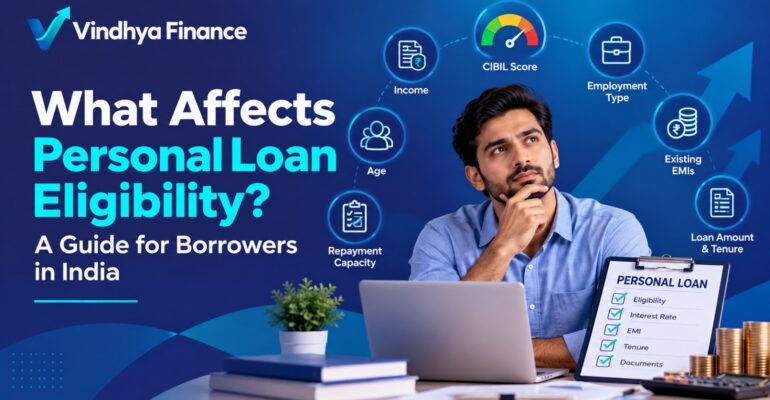
Personal Loan Eligibility is one of the first things to check before applying for unsecured credit. Your salary matters, but lenders may also assess your credit history, existing EMIs, employment or business stability, requested loan amount, repayment capacity and other information before making a decision.
India’s formal credit ecosystem has expanded significantly. According to TransUnion CIBIL’s 2026 credit-expansion study, the share of eligible Indians who had accessed retail credit at least once increased from 35% in March 2017 to 74% in March 2026. The report also says consumption credit, including personal loans, credit cards and consumer-durable loans, was held by 51% of credit-active consumers in March 2026, compared with 34% in 2017.
With more people participating in formal credit, understanding Personal Loan Eligibility in India before applying can help you approach borrowing more carefully.
What Is Personal Loan Eligibility?
Personal Loan Eligibility refers to whether an applicant meets a lender’s criteria for a Personal Loan and, where applicable, what amount and repayment tenure the lender may consider.
Personal Loans are generally unsecured, which means applicants typically do not pledge property as collateral. Because of this, lenders may place significant importance on the applicant’s credit profile, income and ability to repay.
Common Personal Loan Eligibility Criteria may include:
- Monthly or annual income
- Credit history and score
- Employment or business stability
- Existing loans and EMIs
- Age
- Requested loan amount
- Repayment tenure
- Banking and financial records
According to CIBIL’s Personal Loan guidance, lenders may consider CIBIL Score and Report, employment status, annual income and previous EMI-payment behaviour when evaluating an application.
Personal Loan Eligibility Criteria in India
There is no single eligibility formula that applies to every borrower. Different lenders may apply different credit policies.
| Factor | What Lenders May Assess |
| Income | Ability to manage repayments |
| Credit History | Previous borrowing and repayment behaviour |
| Existing EMIs | Current financial obligations |
| Employment | Stability and continuity of income |
| Age | Eligibility and repayment period |
| Loan Amount | Requested borrowing relative to income |
| Tenure | Proposed repayment period |
| Financial Records | Overall financial profile |
For instance, two people with identical salaries may not have the same Personal Loan Eligibility if one has significantly higher existing EMIs.
How Does CIBIL Score Affect Personal Loan Eligibility?
Your CIBIL Score is one part of your credit profile, while your full credit report provides additional information about your borrowing and repayment history.
Lenders can use credit information while assessing unsecured credit because there is typically no property collateral securing a standard Personal Loan. CIBIL’s Personal Loan guidance identifies the CIBIL Score and Report as important parameters in Personal Loan approval decisions.
Before applying, it is sensible to:
- Review your credit report.
- Check for inaccurate or unfamiliar entries.
- Maintain timely repayment of current obligations.
- Understand your outstanding balances.
- Avoid applying for unnecessary new credit.
Credit monitoring is also becoming more common in India. TransUnion CIBIL reported that 183 million Indians were self-monitoring their CIBIL Score as of December 2025, with the number of consumers monitoring their score for the first time growing 27% year over year.
How Do Existing EMIs Affect Personal Loan Eligibility?
Existing EMIs can influence how much of your income remains available for another monthly repayment.
Consider two borrowers earning ₹75,000 per month.
| Borrower | Existing EMI | New EMI Consideration |
| Borrower A | ₹5,000 | More income remains after current debt |
| Borrower B | ₹25,000 | More income is already committed |
This example does not predict approval, because lenders use their own assessment methods. It simply shows why repayment capacity matters alongside income.
Before using a Personal Loan Eligibility Calculator, calculate your current monthly obligations so the estimate reflects your broader financial situation.
Personal Loan Eligibility for Salaried vs Self-Employed Applicants
Both salaried and self-employed individuals can seek Personal Loans, subject to lender-specific criteria. However, the documentation used to establish income can differ.
Salaried Applicants
Lenders may commonly ask for:
- Recent salary slips
- Bank statements
- Identity and address proof
- Employment-related information
Self-Employed Applicants
They may additionally need:
- Income-tax returns
- Financial statements
- Business-related records
- Bank statements
- Office/business address proof
CIBIL’s document checklist also indicates that documentation differs between salaried and self-employed applicants and can vary from one lender to another.
For product-specific guidance, explore Vindhya Finance’s Personal Loan service page.
What Factors Affect Personal Loan Eligibility?
Beyond income and credit history, several other factors can influence how an application is assessed.
Employment or Business Stability
A stable source of income helps lenders evaluate repayment capacity. The relevance and required evidence may differ for salaried and self-employed applicants.
Loan Amount
Requesting a larger amount can increase the expected monthly repayment. The lender may assess whether that amount fits your financial profile.
Loan Tenure
A longer tenure can reduce the monthly EMI but may increase the total interest paid over the repayment period.
Age
Age can affect eligibility and the tenure available under a lender’s policy.
Financial Obligations
Credit-card balances, existing loans and other recurring obligations can affect how much additional debt you can reasonably manage.
How to Improve Personal Loan Eligibility Before Applying
There is no guaranteed method to secure approval, but better financial preparation can help you present a more organised application.
- Check your credit report before applying.
- Pay existing EMIs on time.
- Manage unnecessary debt where practical.
- Keep income documents updated.
- Avoid inconsistent information across your application and documents.
- Choose a borrowing amount aligned with your repayment capacity.
- Compare the total cost rather than looking only at the advertised interest rate.
The goal isn’t simply to maximise borrowing. It is to choose an obligation that fits realistically within your monthly finances.
Ready to Check Your Options?
Share your requirement and get guidance on the next steps in your Personal Loan journey.
Check Personal Loan Eligibility with Vindhya Finance
What Documents Are Required for Personal Loan Eligibility?
Personal Loan Requirements vary by lender and applicant profile.
Common document categories can include:
- Identity and address proof
- PAN/KYC documents
- Salary slips
- Bank statements
- Income-tax returns
- Employment or business records
- Other financial documents requested by the lender
According to CIBIL’s Personal Loan document checklist, the documentation can differ for salaried and self-employed applicants and is indicative rather than universal.
Frequently Asked Questions
What factors affect Personal Loan Eligibility?
Income, credit history, existing EMIs, employment or business stability, age, requested loan amount, tenure and other lender-specific criteria can influence eligibility.
What CIBIL Score is required for a Personal Loan?
There is no single CIBIL Score that guarantees approval across every lender. Credit score is considered alongside income, existing obligations and other aspects of the applicant’s profile.
Can self-employed individuals apply for a Personal Loan?
Yes. Self-employed applicants can apply subject to the lender’s criteria. They may need additional income, tax and business-related documentation.
Can existing loans reduce Personal Loan Eligibility?
Existing loans and EMIs can affect repayment capacity and therefore may influence how a lender assesses a new Personal Loan application.
Conclusion
Understanding Personal Loan Eligibility before applying can help you approach borrowing with more realistic expectations. Income is important, but it is only one part of the assessment. Credit history, existing EMIs, employment or business stability, age, requested loan amount, tenure and overall repayment capacity may also influence the lender’s evaluation.
Before submitting an application, review your credit profile, understand your existing obligations and prepare the relevant Personal Loan Requirements. A Personal Loan Eligibility Calculator can provide an initial estimate, but it should not be treated as a guarantee of approval or a final loan offer.
When you’re ready, explore Vindhya Finance Personal Loan assistance or contact the Vindhya Finance team to understand the next steps.